How to Play Card Dice
Auto rolls, timed scoring, chapters, tables, and face customization.
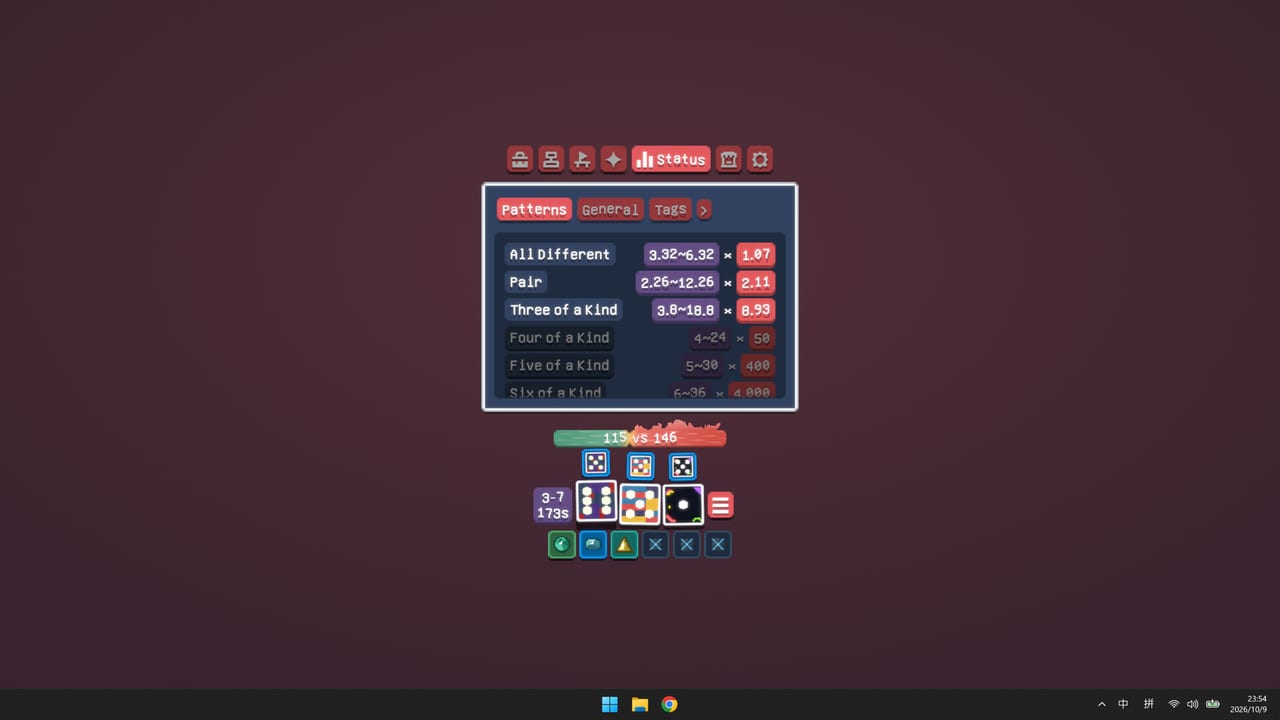
Card Dice plays like an idle casino tournament: your card dice roll automatically, you score during timed matches, and you climb 315 tables across 3 chapters while collecting faces, gems, and engravings. This how-to-play guide explains the core loop so every other page on the wiki—builds, dealer challenges, tier lists—uses the same vocabulary.
If you have not finished onboarding, skim Getting Started first, then return here for systems depth.
The core loop
- Enter a table in your current chapter.
- Let card dice auto-roll while the match timer runs.
- Convert rolls into score according to your build’s gems, engravings, and equipment.
- Beat the opponent’s score before time expires.
- Collect rewards, trade up equipment when it makes sense, and unlock tougher tables.
- Attempt dealer challenges when your build is ready—there are 63 across the chapters.
Idle design means you are not mashing a roll button. You are choosing tables, reading match outcomes, and improving the machine that rolls for you. That is why builds matter as much as raw playtime.
Auto-rolling card dice
Auto-rolling is the heartbeat of Card Dice. Once a match starts, dice keep producing results without constant input. Your attention shifts to preparation: which equipment is equipped, which gems and engravings are active, and whether this table or challenge matches your current power.
Because rolls are automatic, “playing well” looks like clean preparation plus knowing when to stop and trade up. If matches feel random, check whether your build effects actually stack toward one scoring plan. Random gem soup underperforms a focused setup—details live in the Builds Guide.
Scoring in timed matches
Every match is a race against the clock as much as against the opponent. Higher consistent scoring beats a single lucky spike that leaves you empty for the rest of the timer. Watch how your score climbs across the match: steady curves usually mean your build is doing its job; flat stretches mean your effects are not triggering often enough or your equipment is outdated for the table.
Practical scoring habits:
- Compare your score pace to the opponent early; if you fall behind immediately, the table may be above your trade-up level.
- After a loss, change one variable—equipment piece, gem focus, or engraving direction—then retry. Changing everything at once hides what worked.
- After a win that felt narrow, trade up before jumping multiple tables ahead.
- Use private rooms later for shared tag bonuses; scoring still depends on your personal build quality.
Timed matches also teach patience. Leaving a match to rearrange gear is often smarter than repeating a doomed table. Card Dice supports play-at-your-own-pace habits on Steam; use that freedom.
Chapters and table progression
Progression is structured as 3 chapters containing 315 tables total. Think of chapters as difficulty arcs and tables as the individual rungs. Early tables onboard scoring. Mid-chapter tables demand coherent gems and engravings. Late tables and dealer challenges punish neglected trade-ups.
How to climb without stalling:
- Clear enough tables to keep reward flow healthy before you camp one fight forever.
- When a table spikes in difficulty, open builds and tier pages instead of grinding blindly.
- Treat chapter transitions as gear checks. If the next chapter’s first tables crush you, return to trade-ups and refine effects.
- Track dealer challenges separately from normal tables—see Dealer Challenges for timing and prep.
Advancing tables is the main story. Cosmetics and market activity are side systems. Keep the ladder moving.
Faces customization overview
Card Dice includes over 200 dice faces so you can customize the look of your card dice. Faces are a collection and expression layer. They do not replace gems, engravings, or equipment when you need more score. Unlock and equip faces you like after your active build is stable enough to clear the tables you care about.
A healthy habit: after a reward dump, sort power items first, then browse new faces. That order prevents cosmetic distraction during chapter pushes. If a face is tied to an event or achievement later, still evaluate it as a visual unlock unless the game explicitly ties a face to a gameplay effect—and do not invent such effects here.
Builds touch every match
Even this how-to page must stress builds, because auto-rolls only amplify what you equipped. Gems and engravings create different build directions; stacking compatible effects raises average score across the timer. Equipment trade-up feeds those sockets and stats. When you are ready for a full breakdown, read the Builds Guide, then use Gems & Engravings and Best Builds for ranked shortlists.
Do not wait until endgame to learn stacking. Mid-chapter is where bad habits calcify. Spend one session experimenting on tables you already beat so failures are cheap.
Dealer challenges inside the loop
Dealer challenges are specialty opponents woven through the three chapters—63 in total. They are part of how you play, not a separate mode you ignore until “later forever.” Attempt them when your build has a clear identity and your recent trade-ups landed. Failures still teach scoring gaps; just do not burn attempts while your inventory is full of obsolete gear.
Full prep, reward mindset, and timing advice live on Dealer Challenges. Link that page whenever a chapter gate asks for a dealer win.
Co-op, private rooms, and tags
How to play solo is the foundation. Online co-op lets you join friends, and private rooms can share tag counts for higher bonuses. Tags become more valuable when everyone understands the loop: you still auto-roll, you still score on a timer, and you still need personal builds that function if room bonuses fluctuate.
Co-op etiquette that keeps sessions useful:
- Agree which tables or dealer challenges you are targeting.
- Share whether you are testing builds or pushing chapter progress.
- Avoid carrying someone through content they do not understand—teach the loop, then stack bonuses.
Steam Community Market trading sits beside co-op as a social economy layer. Buy and sell only after you know which pieces your build actually needs.
Systems you should not invent
Stick to confirmed Steam systems when you reason about play: auto-rolling card dice, timed matches, gems and engravings, equipment trade-up, 315 tables, 3 chapters, 63 dealer challenges, 200+ faces, Community Market, private room tag bonuses, single-player, and online co-op. Do not invent promo codes on this page, exact gem names, or unconfirmed patch numbers. For codes and updates, use Codes and Updates when those hubs have live info.
Practice plan for learning the loop
Session A — readability: Replay three early tables. Watch score pace. Change nothing. Learn what “normal” looks like.
Session B — one upgrade: Trade up one equipment line or swap one gem focus. Replay the same tables. Note score pace changes.
Session C — chapter push: Advance until the first uncomfortable loss. Stop. Open the Builds Guide and Tier List Hub. Adjust, then continue.
Session D — dealer probe: With a stable build, attempt one dealer challenge using tips from Dealer Challenges. Win or lose, trade up with the outcome in mind.
Quick reference
| System | What you do |
|---|---|
| Auto rolls | Prepare loadouts; dice handle repetition |
| Timed matches | Maximize score before the clock ends |
| Tables / chapters | Climb 315 tables across 3 chapters |
| Faces | Customize dice look (200+ options) |
| Gems / engravings | Define build identity |
| Trade-up | Convert weak gear into stronger gear |
| Dealer challenges | 63 specialty fights—prep first |
| Private rooms | Share tag counts for bonuses with friends |
Master this loop, then specialize. Builds deepen power. Dealer challenges test it. Tier lists shorten decisions when the meta shifts. Return to the Guides Hub whenever you need the full tutorial map.
Frequently Asked Questions
Quick answers to the most common Card Dice questions.
How does scoring work in Card Dice?
Card dice roll automatically during timed matches. Your equipment, gems, and engravings shape how rolls convert into score. Beat the opponent before time expires to clear the table.
How many tables and chapters are there?
Card Dice includes 315 tables across 3 chapters, plus 63 dealer challenges woven through that progression.
Are dice faces just cosmetics?
Faces customize the look of your card dice across 200+ options. Treat them as cosmetics unless the game clearly states otherwise; power comes from equipment, gems, and engravings.
Where should I go after learning the loop?
Read the Builds Guide for gem and engraving stacking, then Dealer Challenges for the 63 specialty fights. Use Best Builds and Gems & Engravings on the tier list when you want ranked picks.
Does co-op change the core rules?
You still auto-roll and score on a timer. Private rooms can share tag counts for higher bonuses, but your personal build quality still decides most outcomes.